

With modern lifestyles and the increasing use of digital devices, more and more children are facing vision problems, especially myopia, or nearsightedness. Szabolcs Szalay, head of Rapidus Optika, will help us navigate the world of myopia and share with us how to recognise and effectively treat this increasingly common phenomenon.
The meaning of myopia
Myopia, also known as nearsightedness, is a common refractive error in which the eye cannot focus properly on distant objects, so they appear blurred. In a myopic eye, the length of the eyeball is too long or the curvature of the cornea is too great, causing light to focus in front of the retina instead of right on it. Myopia testing in children involves several steps and is done using different tools and methods.
Diagnosis of myopia
The first step in the assessment is to take a medical history, where parents are asked about the child’s vision problems, family history and other health factors. This step helps the ophthalmologist to get an overall picture of the child’s health. Several methods are used to determine refraction. In most methods, a light signal is projected into the eye and the refraction is determined by measuring its path and examining its behaviour.
- Skiascopy (shadow test): based on measuring the distance point. Can only be performed with pupil dilation.
- Automatic refractometry: the signal is adjusted by photodiodes é Sensitive to adaptation and accurate fixation.
- Keratometry: measures the refractive power of the cornea at its centre.
- Corneatopography: topographic method
- Ultrasound scan: to assess the exact anatomy.
Investigating myopia in children
The test consists of several steps and is carried out using different tools and methods. It is important that parents pay attention to their children’s vision, as early detection is key to effective treatment.
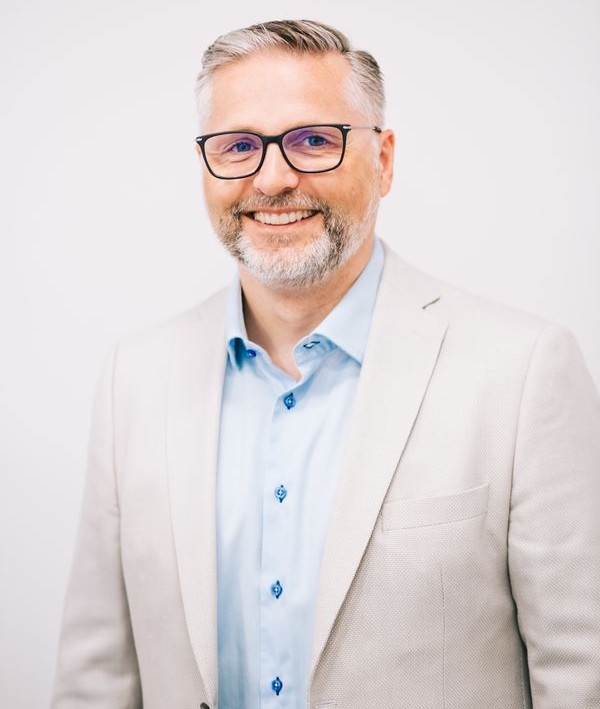
Szabolcs Szalay
The visual acuity test tests your child’s vision at both near and far. This is usually done using ophthalmic charts containing letters and diagrams of different sizes. During a visual acuity test, it is important that the child is comfortable and understands what they need to do. For this reason, tests are often done in a playful way so that the little ones do not feel self-conscious.
The next step is the refraction test, which consists of objective and subjective measurements. Objective measurements involve using an autorefractometer or retinoscope, while subjective measurements involve trying different lenses in the child’s eyes and using the child’s feedback to determine the exact diopter.
Ophthalmoscopy involves examining the internal structures of the eye, especially the retina and optic nerve. This is followed by a measurement of the length of the eye axis, which is carried out using ultrasound or optical methods. This measurement helps to determine the length of the eyeball, which is important information for diagnosing myopia.
The first eye examination is usually recommended at 6 months of age to rule out congenital eye problems. This is followed by another comprehensive eye examination at the age of 3 years and then again before starting school at the age of 5-6 years. At school age, children should have their vision checked annually.
Treatment and prevention of myopia
Myopia can be treated in several ways, including wearing glasses or contact lenses and using special eye drops. Orthokeratology is a procedure in which children wear special contact lenses at night, which reshape the cornea so that correction is not needed during the day.
Szabolcs Szalay: “One of the newest methods in the treatment of myopia is the use of multifocal contact lenses, which can reduce the progression of myopia. In addition, it is important that children spend a lot of time outdoors, because natural light can help slow down the onset and worsening of myopia.”
How can we help our children?
As parents, it is important to monitor your child’s vision and recognise the signs of myopia early. If your child squints a lot, holds books or digital devices close to their face, or has difficulty reading the blackboard at school, it is a good idea to see an eye specialist as soon as possible.
Szabolcs Szalay: “The role of parents is essential in preserving children’s vision. It is important to check children’s vision regularly and support them in wearing the right glasses or contact lenses. We should also encourage them to spend as much time outdoors as possible and limit the time they spend in front of screens.”
Summary
Myopia is an increasingly common condition in children and can be effectively treated with early detection and appropriate treatment. With the advice of Szabolcs Szalay, parents and professionals working together can help our children maintain their sharp vision and live a full life.
Szabolcs Szalay: “Regular eye examinations and appropriate lifestyle changes are key to the prevention and treatment of myopia. Let’s be vigilant and do everything we can to protect our children’s vision.”
The myopia test in children:
- Preliminary anamnhistory of admissionécompleted:
- Asking parents about the child’s vision problems, family history, and other health factors
- Visionélesssky testlat:
- Testing the child’s visual acuity at both distance and near, usually with the help of ophthalmic charts
- Refractionous examinationslat:
- Objective refraction measurements: using an autorefractometer or retinoscope
- Subjective refraction measurements: trying on different lenses and based on the child’s feedback.
- We looked atexamination (ophthalmoscopyópia):
- Examination of the internal structures of the eye, especially the retina and optic nerve
- Cylinder length mreachétion:
- Ultrasound or optical methods to determine the length of the eyeball
Recommended age and frequency:
- Firstexamination: the first eye examination is usually recommended at 6 months of age to rule out congenital eye problems.
- Nextexamination: another comprehensive eye examination is recommended at 3 years of age.
- Before startingschool: a thorough check-up is important at the age of 5-6 before starting school.
- School age: School-age children should have an annual eye test, especially if there are signs of myopia or other refractive errors.
Common signs that may indicate myopia in children:
- Blurred vision at a distance.
- Holding a book, tablet or phone close to their face.
- Frequent blinking, eye rubbing
- Concentration difficulties at school, especially when reading the blackboard.
Early detection and treatment of myopia is crucial for children’s vision and overall development. Book an appointment (choose a specialist screening test)!